What happens to a home when its gutter system quietly fails? It rarely shows up as a dramatic leak on day one. More often, water finds the smallest gap it can and works there for months before anyone notices the damage underneath.
The Insurance Information Institute tracked this exact pattern across the US, reporting that water damage and freezing accounted for 22.6% of all home insurance claims in 2023, with an average claim cost exceeding $15,000. A failing gutter system is one of the most common paths that water takes into a home, and the choice between seamless vs sectional gutters sits right at the center of that risk.
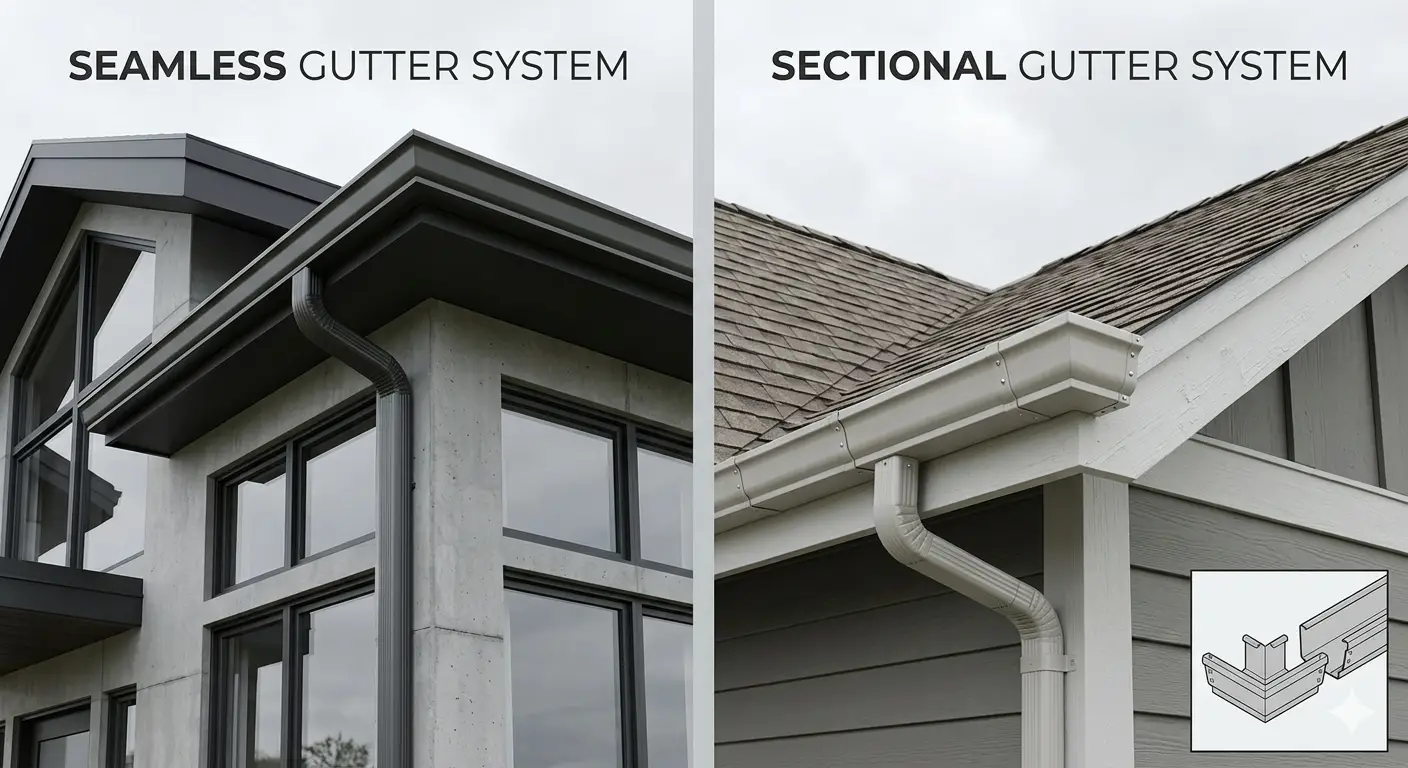
Sectional gutters rely on dozens of joints that can fail over time. Seamless gutters eliminate most of those failure points entirely. The difference between the two systems comes down to five factors that determine which one actually protects a property long term.
What Is the Difference Between Seamless and Sectional Gutters?
The core difference between seamless vs. sectional gutters comes down to how each system is manufactured and installed. Sectional gutters are pre-cut into standard lengths, typically 10 to 20 feet, then joined together with connectors and sealant during installation. Every joint is a potential leak point, and the more joints a system has, the more maintenance it eventually demands.
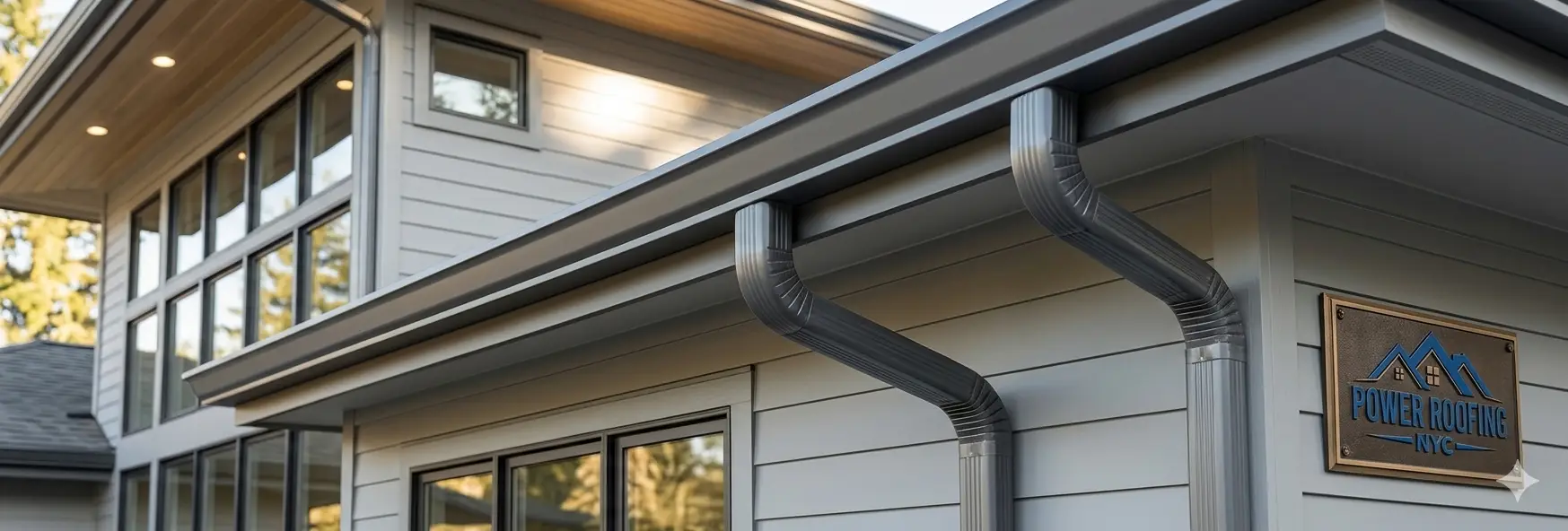
Seamless gutters are custom-fabricated on site using a portable rolling machine that forms a continuous length of metal, usually aluminum, cut precisely to match the home’s roofline. The only seams are at the corners and downspout connections, which dramatically reduces the number of potential failure points compared to a sectional system.
This distinction matters across property types. In New York City, where brownstones and multi-unit residential buildings often have long, continuous rooflines, a seamless system fits the structure more precisely and reduces the number of maintenance points a building manager needs to track across the entire roofline. Professional gutter installation ensures the system is measured and fabricated to the property’s exact dimensions rather than assembled from standard-length pieces.
What Are the Types of Seamless Gutters?
Seamless gutters come in several material options, each suited to different budgets, climates, and aesthetic preferences. Aluminum is the most widely installed option, valued for its lightweight, rust-resistant nature and availability in a wide range of factory-painted colors. It handles New York’s freeze-thaw winters and humid summers without warping, which makes it the standard choice for most residential and multi-unit properties.
Copper seamless gutters represent the premium tier. They develop a natural patina over time, hold up for 50 years or more, and are often chosen for historic properties or homes where appearance carries significant weight. The trade-off is cost, since copper runs substantially more expensive than aluminum per linear foot.
Steel seamless gutters offer strength and durability, particularly in regions with heavy snow loads, but they are heavier and more prone to rust over time if the protective coating is compromised. Vinyl seamless options exist as well, though they are less common and tend to become brittle in extreme cold, making them a less reliable choice for colder climates.
Seamless vs Sectional Gutters Pros and Cons
Each system carries distinct advantages and tradeoffs that matter depending on budget, property type, and long-term maintenance expectations.
Sectional gutters cost less upfront and can be installed without specialized equipment, which keeps initial project costs lower. Damaged sections can also be replaced individually rather than requiring a full system replacement. However, every joint is a potential leak point, sealant breaks down over time, and the visible seams can detract from a building’s curb appeal.
Seamless gutters address most of these weaknesses directly. With no mid-run joints, the risk of leaks drops significantly, debris accumulates less at seam points, and the clean, uninterrupted line gives a property a more polished appearance. The tradeoff is a higher upfront cost and the requirement for professional installation, since the fabrication equipment needed is not something property owners typically have access to. If a section of seamless gutter is damaged, the affected run typically needs full replacement rather than a small patch.
| Factor | Sectional Gutters | Seamless Gutters |
| Upfront Cost | Lower | Higher |
| Leak Risk | Higher, multiple joints | Lower, joints only at corners |
| Installation | DIY possible | Professional required |
| Maintenance | Higher, joint resealing needed | Lower, standard cleaning only |
| Lifespan | 10 to 15 years | 20 to 30 years or more |
| Repair Method | Replace individual sections | Replace full run |
| Appearance | Visible seams | Clean, continuous line |
| Best For | Tight budgets, small structures | Long-term performance, full properties |
Seamless vs Sectional Gutters Cost
Cost is often the deciding factor, and the gap between the two systems is real but not as wide as many homeowners expect once long-term maintenance is factored in.
Sectional gutters typically cost between $3 and $5 per linear foot installed, depending on material choice. Seamless gutters run between $6 and $12 per linear foot installed, with aluminum being the most common and cost-effective option within that range. For a typical property with 150 to 200 linear feet of guttering, that translates to a price difference of a few hundred dollars up to slightly over a thousand dollars at installation.
The calculation changes when long-term costs enter the picture. Sectional systems require periodic resealing and joint inspection, and properties that skip this maintenance often face premature gutter repair needs within 10 to 15 years.
Seamless systems, by comparison, typically only require standard cleaning and occasional inspection, which reduces the cumulative cost of ownership over a 20 to 30 year lifespan even with the higher initial investment.
Seamless vs Sectional Gutters Durability and Appearance
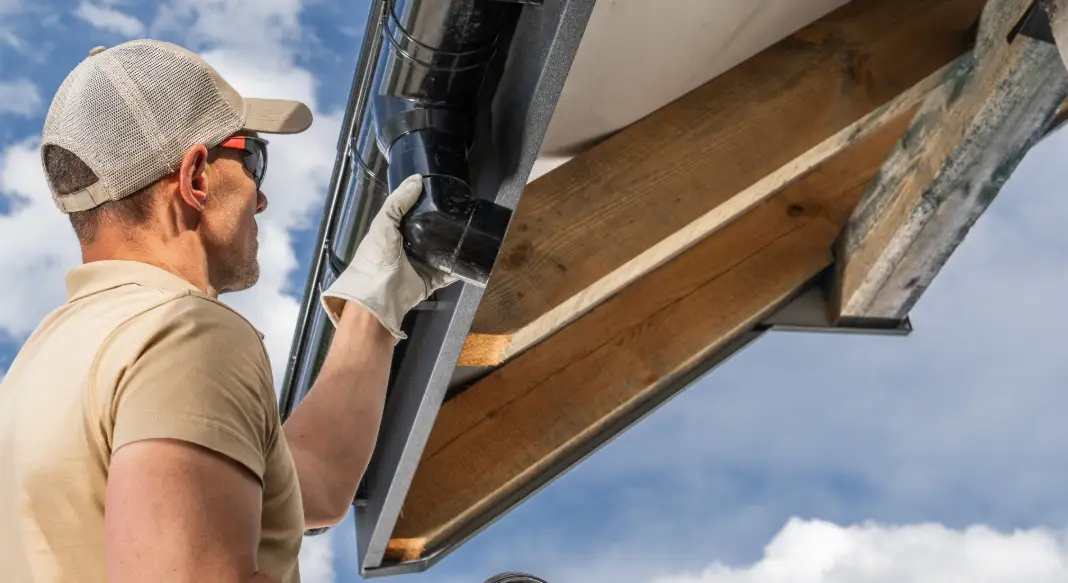
Durability is where seamless gutters separate from sectional systems most clearly. Without joints running every 10 to 20 feet, there are fewer structural weak points for wind, heavy rain, and seasonal temperature swings to exploit. Sectional gutters, even with regular maintenance, tend to show sagging joints, rust at seams, and persistent leaks within 10 to 15 years. Seamless gutters, particularly in aluminum or copper, commonly last 20 to 30 years or longer.
Appearance follows a similar pattern. Seamless gutters present a clean, continuous line that complements most architectural styles, with no visible seams to disrupt the roofline. Sectional gutters show their joints clearly, and as sealant ages unevenly across multiple connection points, the system can develop a patchy, mismatched look well before it actually fails functionally.
For properties planning a gutter replacement, the appearance difference often becomes one of the deciding factors once owners see both systems side by side.
Protect Your Property With the Right Gutter System
The decision between seamless vs sectional gutters depends on budget, property type, and how much ongoing maintenance an owner is prepared to manage. Sectional systems offer a lower entry cost. Seamless systems offer fewer failure points, less maintenance, and a longer service life that often makes up the cost difference over time.
Power Roofing NYC installs and services seamless gutter systems across the five boroughs, from brownstone rooflines in Brooklyn to multi-unit buildings in Queens, and offers gutter cleaning to keep every system performing at the level it was installed to deliver. A gutter system is only as reliable as its weakest joint, and on a property with no joints to fail, that risk simply does not exist.
Before the next storm tests whatever is currently hanging off the roofline, contact Power Roofing NYC for a free assessment of which gutter system actually fits your property.
Frequently Asked Questions
What does gutter installation typically involve for a seamless system?
Gutter installation for a seamless system begins with measuring the property’s roofline, fabricating the continuous run on site using a rolling machine, and securing it with brackets matched to the home’s fascia. The process typically takes a single day for most residential properties, with multi-unit buildings requiring additional time depending on roofline length.
Which is better, seamless gutters or regular gutters?
Seamless gutters generally outperform regular sectional gutters in leak resistance, appearance, and long-term maintenance demands. Regular sectional gutters remain a reasonable choice for tight budgets or smaller structures like detached garages, but seamless systems are the stronger investment for primary residences and multi-unit properties.
What are the disadvantages of seamless gutters?
The primary disadvantages of seamless gutters are higher upfront cost and the requirement for professional installation, since the fabrication equipment is not available for DIY use. If a section becomes damaged, the entire run typically needs replacement rather than a small patch repair.
How much more expensive are seamless gutters than regular gutters?
Seamless gutters typically cost $6 to $12 per linear foot installed, compared to $3 to $5 per linear foot for sectional gutters. For an average property, that translates to a few hundred to slightly over a thousand dollars more upfront, though the gap often narrows when long-term maintenance costs are factored in.
How often should seamless gutters be cleaned?
Seamless gutters should be cleaned at least once a year, ideally twice, in spring and fall. While seamless systems clog less often than sectional gutters due to the absence of mid-run joints, regular cleaning still prevents debris buildup at corners and downspouts.
Can sectional gutters be converted to seamless without replacing the entire structure?
Converting sectional gutters to seamless typically requires removing the existing system entirely, since seamless gutters are fabricated as a continuous run and cannot be partially integrated with sectional sections. The brackets and fascia mounting points are usually reused if they remain in good condition.
Do seamless gutters perform well in snow and ice conditions?
Seamless gutters generally perform well in snow and ice conditions, particularly in aluminum or steel, since the absence of joints reduces the risk of ice expansion cracking sealant at seams. Proper pitch and downspout placement remain important factors regardless of gutter type.
Where can a professional gutter assessment be booked in New York City?
A professional gutter assessment for New York City properties can be booked directly through Power Roofing NYC. Schedule a gutter inspection today to determine whether a seamless upgrade makes sense for your specific property and roofline.