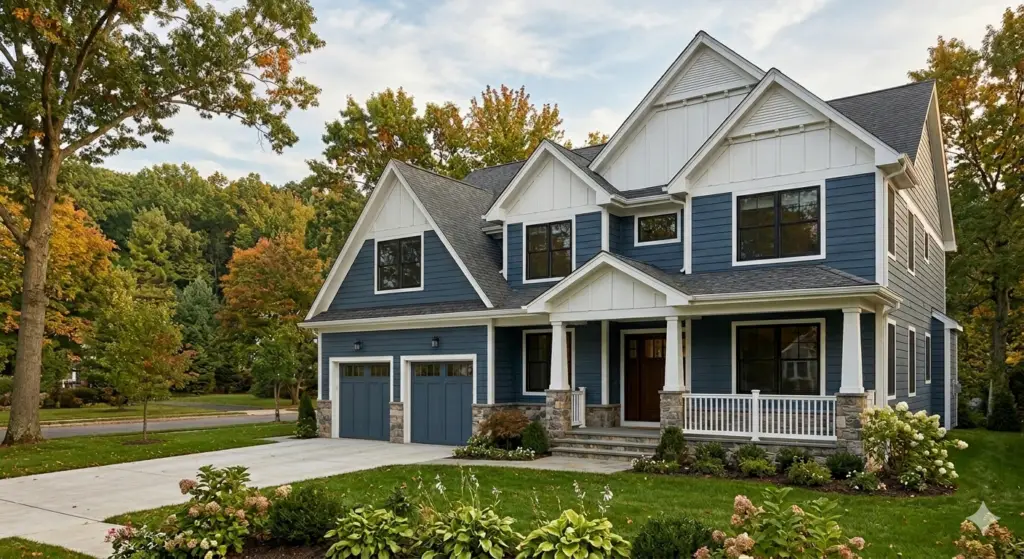
What does your siding look like after its first real NYC winter?
For thousands of homeowners across Queens, Staten Island, and the Bronx, the honest answer is cracked, faded, or already showing the seams that were never supposed to show this soon.
Vinyl siding vs fiber cement is the decision that determines whether that happens to you, and the gap between the two materials matters more in New York than almost anywhere else in the country. Fiber cement has now overtaken vinyl in premium residential specifications nationally, holding 26.8% market share, and siding replacement projects recoup 81.6 to 86.3% of their cost at resale.
That shift is not a marketing-driven trend. It is driven by exactly the kind of weather your home deals with every January. Here is what actually separates these two materials once the marketing language is stripped away.
What Is the Most Durable Exterior Siding for an NYC Home?
What is the most durable exterior siding comes down to how a material handles freeze-thaw cycling, and on that measure, fiber cement and vinyl land in very different places.
Fiber cement is made from cement, sand, and cellulose fibers, creating a dense material that does not expand and contract the way plastic-based products do. In NYC’s climate, where temperatures swing from below freezing to humid summer heat within the same week, that dimensional stability is the difference between siding that lasts 50 years and siding that needs panel replacements after 15.
Vinyl, made from PVC, becomes brittle in cold temperatures and can crack on impact during the kind of hard freezes NYC sees every winter, while dark-colored panels can warp under direct sun exposure against brick or stone facades that radiate heat back onto them
Vinyl typically lasts 20 to 30 years in moderate climates, but NYC’s extremes tend to push that toward the lower end. Fiber cement also resists fire, pests, and rot, and holds paint and color far longer because the material itself does not degrade under UV the way PVC does.
What Sets Vinyl and Fiber Cement Apart in NYC?
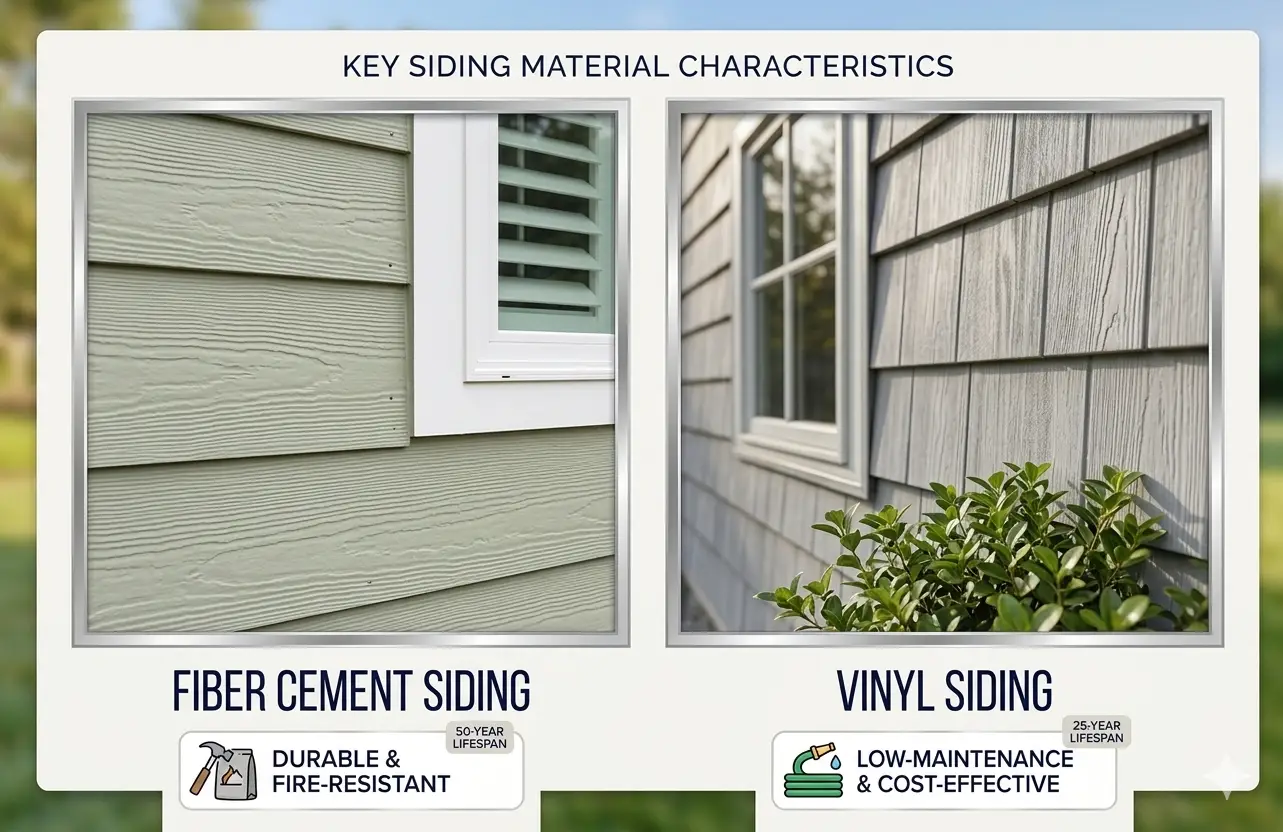
Fiber cement siding vs vinyl cost is just one piece of the picture. Here are the factors that matter most once you account for New York’s climate and housing stock.
Cost
Vinyl wins decisively on price. Material costs run $2 to $7 per square foot, with installed pricing landing between $6 and $12 per square foot once labor is included. Fiber cement runs noticeably higher, with material costing $5 to $13 per square foot and installed pricing between $11 and $20 per square foot due to its weight and the specialized tools required.
For a typical 1,500-square-foot NYC home, that translates to roughly $9,000 to $18,000 for a full vinyl job versus $16,500 to $30,000 for fiber cement.
Lifespan
Vinyl siding typically lasts 20 to 30 years under normal conditions, but NYC’s freeze-thaw cycling tends to push real-world performance toward the lower end of that range. Repeated expansion and contraction through winter temperature swings causes vinyl panels to become brittle faster than in milder climates, and impact damage from hail or debris becomes more likely as the material ages.
Fiber cement, by contrast, is rated for 50 years or more, and its dense composition does not react to temperature swings the same way. Homes in older NYC neighborhoods with fiber cement siding installed decades ago routinely show far less wear than vinyl-clad homes from the same era. For anyone planning to stay in their home long-term, that lifespan gap alone often justifies the higher upfront cost.
Maintenance
Vinyl siding requires essentially no maintenance beyond occasional washing, since its color is mixed throughout the material rather than applied as a surface coating. There is nothing to repaint and nothing to reseal under normal circumstances. Fiber cement requires more ongoing attention.
Most fiber cement siding needs repainting every 10 to 15 years to maintain its appearance and the protective layer that shields it from moisture. Caulking around joints and trim also needs periodic inspection. For homeowners who want a true set-it-and-forget-it exterior, vinyl’s lower maintenance burden is a real advantage, though the repainting cycle for fiber cement is infrequent enough that most owners only deal with it once or twice over a 30-year ownership period.
Resale Value
Fiber cement siding replacement recoups between 81.6 and 86.3 percent of its installed cost at resale, one of the strongest returns of any exterior renovation project. Vinyl siding replacement typically recoups a smaller percentage, reflecting buyer perception that vinyl is a budget material even when newly installed.
In NYC’s competitive resale market, where buyers increasingly compare exterior material quality alongside roof condition and window age, fiber cement’s premium appearance can influence first impressions during showings. That said, vinyl replacement still recoups a meaningful portion of its cost, and for sellers prioritizing a quick, lower-cost refresh before listing, vinyl remains a reasonable choice.
Weight and Installation
Vinyl siding is lightweight, which makes it faster and less expensive to install. A typical crew can complete a standard NYC row house in a matter of days using basic tools. Fiber cement is significantly heavier, often requiring two installers per panel and specialized fiber cement shears or saws with dust control attachments. Installation takes longer and costs more in labor as a result.
For NYC properties where scaffolding or sidewalk shed permits are already factored into a project’s timeline, the additional installation time for fiber cement is less of a practical obstacle than it might be elsewhere, since the project timeline is often driven by permitting regardless of material choice.
Vinyl Siding vs Fiber Cement Pros and Cons
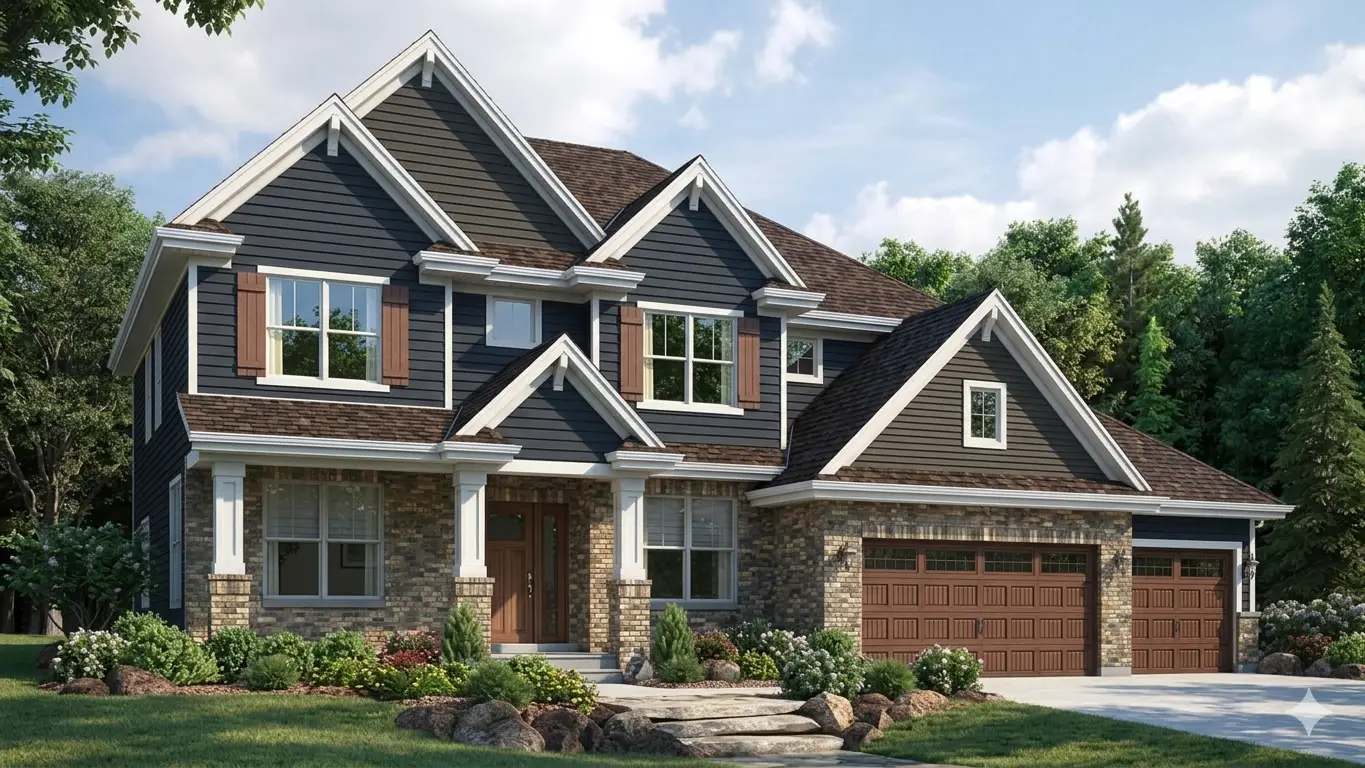
Weighing vinyl siding vs fiber cement pros and cons comes down to priorities. Vinyl’s pros are low cost, fast installation, zero repainting, and a wide range of colors and styles. Its cons are a shorter lifespan, brittleness in cold weather, and lower resale recoup.
Fiber cement board vs vinyl siding flips most of those points. Fiber cement’s pros include a 50-plus-year lifespan, fire resistance, dimensional stability during freeze-thaw cycles, and the strongest resale recoup of any siding material. Its cons are a higher upfront cost, heavier installation requirements, and periodic repainting.
For NYC homeowners, the decision often comes down to time horizon. Vinyl makes sense for rental properties, quick flips, or anyone prioritizing the lowest possible upfront cost. Fiber cement makes sense for owner-occupied homes where the buyer plans to stay long enough to benefit from the lifespan and avoid a second replacement cycle entirely.
Does Vinyl Siding Leak vs Fiber Cement?
Whether vinyl siding leaks vs. fiber cement is a fair question, because both materials can allow water infiltration when installation quality is poor, but the failure points differ.
Vinyl siding relies on overlapping panels and seams that are not individually sealed. Water that gets behind a panel during heavy wind-driven rain, common during NYC nor’easters, can travel along the back of the siding and find its way into the wall assembly through gaps around windows, J-channels, or corner posts. Vinyl itself does not absorb water, but it does not prevent water from getting behind it either.
Fiber cement is far less prone to this because the material itself is dense and non-porous, and panels are typically installed with caulked joints that create a more continuous barrier. The most common leak point with fiber cement is failed caulking around trim and penetrations, which is a maintenance issue rather than a material flaw. In both cases, siding repair addressing failed seams or caulking before water reaches the sheathing is far cheaper than waiting until rot or mold forces a larger repair.
Insulated Vinyl Siding: Is It Worth It?
Insulated vinyl siding adds a layer of rigid foam backing fused directly to the back of each panel, and for NYC homeowners trying to close the energy-efficiency gap with fiber cement, it is the most practical upgrade in the vinyl category.
Standard vinyl siding has an R-value of about 0.61, contributing little to a home’s thermal envelope. Insulated vinyl raises that to between 2.0 and 3.0, which meaningfully reduces thermal bridging at the studs and can lower heating and cooling costs by up to 20 percent, according to Department of Energy guidance, often paying for the upgrade within 7 to 10 years.
The tradeoff is cost. Insulated vinyl runs higher than standard vinyl, narrowing the price gap with fiber cement somewhat, though fiber cement still wins on lifespan and resale. For homeowners committed to vinyl but concerned about energy costs in older, less-insulated NYC homes, insulated vinyl is the upgrade worth the extra spend.
What Are People Replacing Vinyl Siding With in 2026?
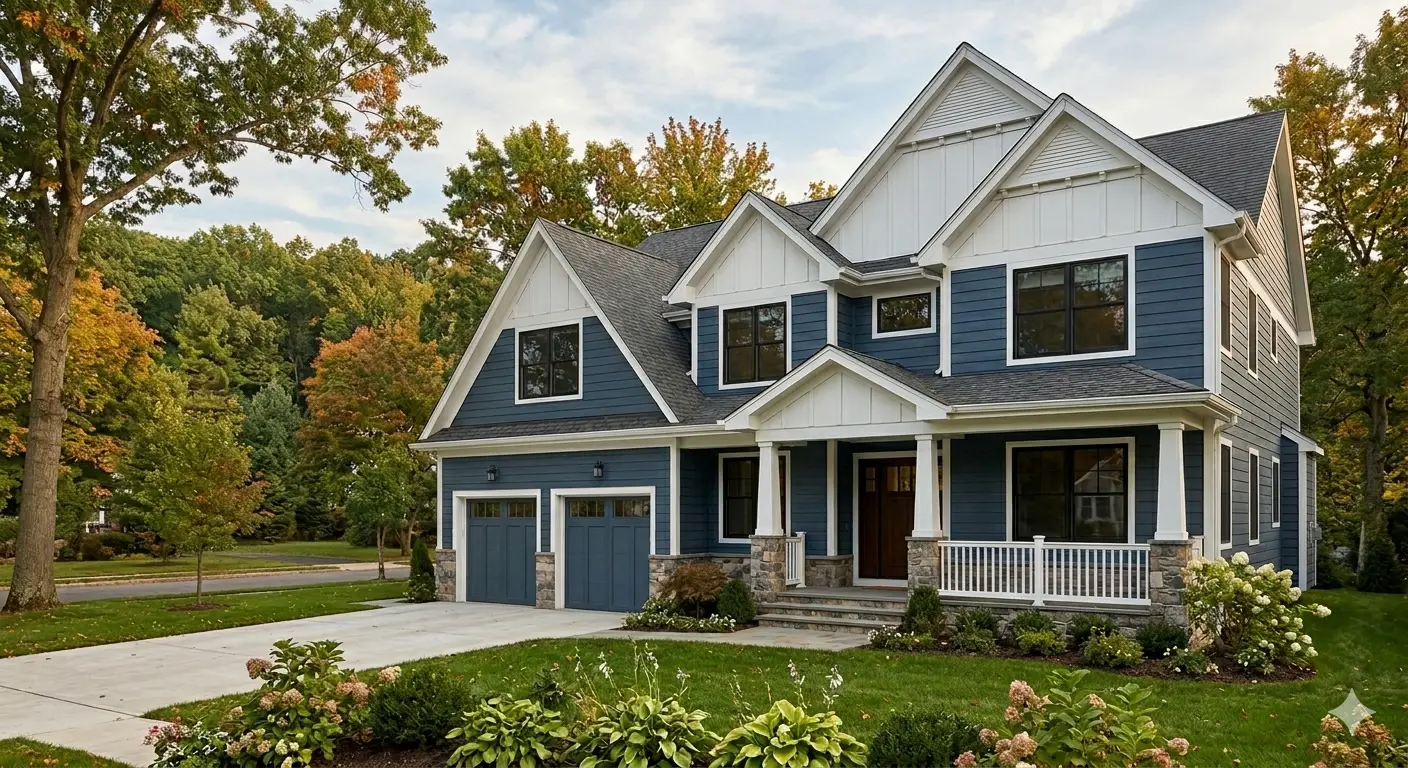
What people are replacing vinyl siding with in NYC has a clear answer this year: fiber cement, increasingly in board-and-batten profiles rather than traditional clapboard. The vertical board-and-batten look has become the most requested style for homeowners replacing aging vinyl, paired with dark color palettes like charcoal, navy, and deep green, which now appear in roughly 35 percent of new installations, according to James Hardie’s 2024 design report.
This shift tracks with the broader market move toward fiber cement in premium residential specifications. Homeowners who installed vinyl 20 to 25 years ago and are now facing brittleness, fading, or panel warping are using the replacement as an opportunity to upgrade the materials entirely, rather than simply swapping vinyl for vinyl.
Which Is Better, Vinyl Siding or Fiber Cement?
Which is better, vinyl siding or fiber cement, comes down to how long you plan to stay and what your siding is dealing with each winter. Vinyl wins on upfront cost and ease. Fiber cement wins in lifespan, resale value, and resilience to NYC’s freeze-thaw cycles. Vinyl siding vs. fiber cement is not a question with a single right answer, but for most NYC homeowners planning to stay put, fiber cement’s 50-year lifespan and 81.6 to 86.3 percent resale recoup make it the stronger long-term investment.
Power Roofing NYC installs both materials across all five boroughs, with crews who know how each performs through a real NYC winter. Whether you need siding installation for a full replacement or want to know whether your current siding is contributing to roof-level moisture issues, a combined roof replacement and siding assessment catches problems before they compound.
The material you pick now decides whether you’re redoing this in 20 years or in 50. Contact Power Roofing NYC to get a free estimate.
Frequently Asked Questions
Which is better, vinyl siding or fiber cement?
Fiber cement is better for long-term value, lasting 50 years or more and recouping 81.6 to 86.3 percent of its cost at resale. Vinyl is better for lower upfront cost and faster installation.
What is the cheapest material to side a house with?
Vinyl siding is the cheapest option, with material costs as low as $2 per square foot and installed costs starting around $6 per square foot, making it the most common choice for budget-conscious projects.
What is the most durable exterior siding?
Fiber cement is the most durable common siding material, rated for 50 years or more and resistant to fire, pests, and the freeze-thaw cycling that damages vinyl over time.
Does vinyl siding leak more than fiber cement?
Vinyl can allow water behind panels through unsealed seams during wind-driven rain. Fiber cement’s caulked joints and dense material create a more continuous barrier, though failed caulking can still cause leaks in either material.
Is insulated vinyl siding worth the extra cost?
Yes, for homeowners committed to vinyl. Insulated vinyl raises the R-value from 0.61 to 2.0-3.0, reducing heating and cooling costs by up to 20 percent and often paying for itself within 7-10 years.
What are most people replacing old vinyl siding with?
Fiber cement in board-and-batten profiles, often in dark colors like charcoal or navy, is the most common replacement choice for homeowners upgrading from aging vinyl in 2026.
Does fiber cement siding need a lot of maintenance?
Fiber cement needs repainting roughly every 10 to 15 years and periodic caulking inspection. Compared to vinyl’s near-zero maintenance, it requires more attention but far less than wood siding.
How do I know if my siding is contributing to a roof problem?
A combined exterior assessment is the most reliable way to know. Book a roof inspection with Power Roofing NYC, and the team will check both systems together