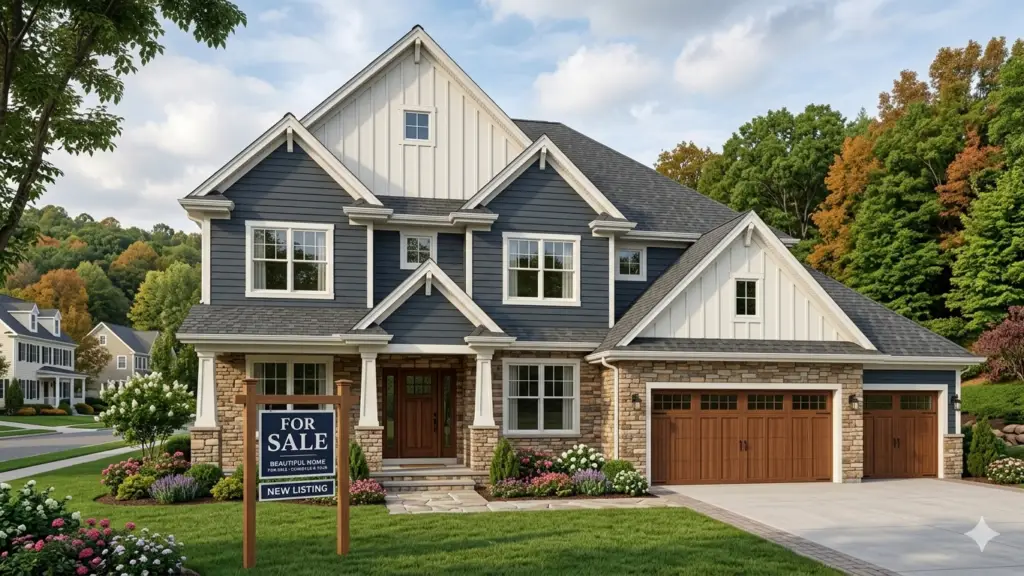
What is the first thing a buyer sees before they step inside your home?
Not the kitchen. Not the floors. The exterior. And in a market where the total value of all NYC properties reached $1.579 trillion in 2026, a 5.7% year-over-year increase according to the NYC Department of Finance, every decision that affects how your home looks from the street carries real financial weight.
Whether siding increases home value is not a complicated question. Still, the answer depends on which material you choose, how well it is installed, and whether it fits the neighborhood your buyer is already comparing you against.
Here is what the numbers say and what NYC homeowners need to know before committing to a siding upgrade.
How Much Does New Siding Increase Home Value?
Does new siding increase home value in a market like New York City? Yes, and the dollar amounts are higher than most homeowners expect because NYC’s above-median property values amplify the percentage returns reported by national averages.
| Siding Material | Average Value Added | Siding ROI |
| Fiber Cement | $24,420 | 113.7% |
| Manufactured Stone Veneer | $11,180 | 102% |
| Steel Siding | varies | 86% |
| Vinyl Siding | $15,490 | 80.2% |
| Wood Siding | varies | 77% |
| Stucco | varies | 75% |
These figures come from the Remodeling 2025 Cost vs Value Report, which measures average resale recoup across US markets. In NYC, where median home prices in boroughs like Brooklyn and Queens regularly exceed $800,000 to $900,000, the dollar value of a siding upgrade scales proportionally above these national averages.
How much new siding increases a home’s value on a specific NYC property depends on three factors: the material chosen, the quality of installation, and how well the new siding matches the home’s architectural style and neighborhood context. A fiber cement upgrade on a well-maintained Staten Island colonial delivers a different return than the same material on a Bronx row house, where comparable sales are driven by different buyer expectations.
Which Siding Increases Home Value the Most?
Which siding increases home value the most in NYC depends on the property type, the neighborhood, and how buyers in that specific market assess exterior material quality.
Fiber Cement Siding
Fiber cement consistently delivers the strongest return among standard residential siding materials, with a 113.7 percent ROI and an average of $24,420 added to resale value nationally. In NYC’s competitive resale market, where buyers compare exterior condition alongside roof age and window quality, fiber cement’s premium appearance and 50-year lifespan signal a well-maintained property before a buyer ever steps inside. For detached and semi-detached homes across Staten Island, Queens, and Brooklyn, fiber cement is the material that most reliably elevates a property to a higher tier of buyer consideration.
Vinyl Siding
Vinyl delivers an 80.2 percent ROI nationally and adds an average of $15,490 in resale value. For NYC rental properties, starter homes, and properties where the renovation budget limits material choices, vinyl remains a meaningful value-add over aging or damaged original siding. The return is lower than fiber cement, but the upfront cost is significantly less, making vinyl the stronger choice when the goal is a fast, cost-controlled exterior refresh ahead of a sale rather than a long-term material investment.
Manufactured Stone Veneer
Manufactured stone veneer applied to a partial facade, which is typically 300 square feet at the base or around the entry, delivers a 102 percent ROI, making it one of the highest-returning exterior projects available. For NYC properties where a full siding replacement is not in the budget, adding stone veneer to the entry or front-facing elevation, alongside a siding repair of the existing material, is a targeted approach that maximizes the curb-appeal return without the full replacement cost.
Does Fiber Cement Siding Really Increase Home Value?
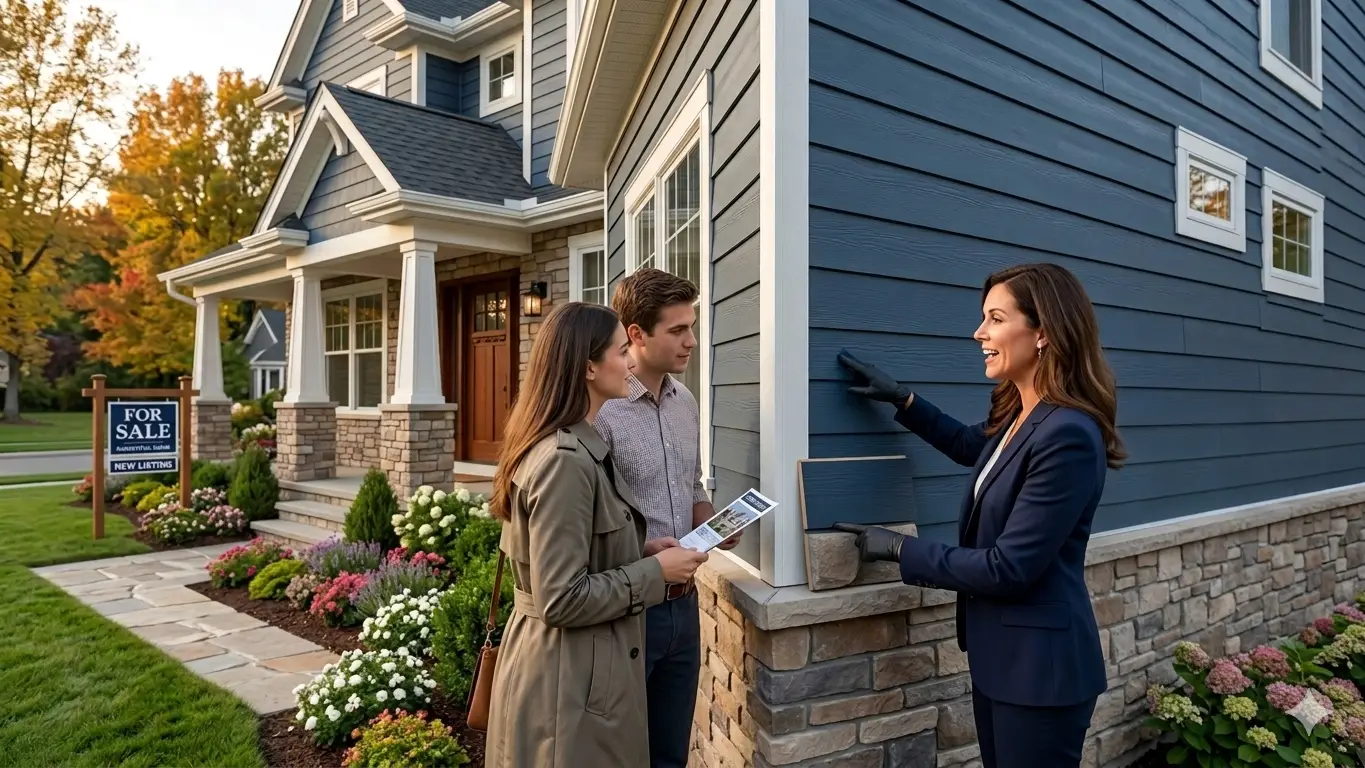
Does fiber cement siding increase home value more than any other standard residential material? The data says yes, and the reasons go beyond the ROI percentage.
Fiber cement is the only common siding material that simultaneously delivers a premium aesthetic, a 50-year lifespan, Class A fire resistance, and pest and moisture resistance in a single product. Buyers in NYC’s resale market increasingly recognize fiber cement at first glance, and that recognition carries a perceived quality premium that influences offer prices before the inspection report is even reviewed.
The 113.7% ROI figure from the Remodeling 2025 Cost vs Value Report means that, for most NYC homeowners, a professional fiber cement siding installation pays for itself at resale and adds value on top of the project cost. On a Brooklyn or Queens property where the median sale price exceeds $800,000, that translates to a net value gain of several thousand dollars above the installation cost rather than simply recouping what was spent.
Fiber cement also holds its appearance longer than vinyl between sales cycles. A home re-sided in fiber cement five years before listing looks newer and better maintained than a home re-sided in vinyl at the same time, because fiber cement does not fade, warp, or show UV degradation the way PVC-based products do under NYC’s sun exposure.
Does Vinyl Siding Increase Home Value?
Does vinyl siding increase home value in NYC? Yes, though the return is more modest than with fiber cement and depends heavily on the condition of the existing siding it replaces.
Vinyl siding delivers an 80.2 percent ROI nationally, adding an average of $15,490 to the resale value of a standard 1,250-square-foot installation. In NYC’s market, that return is most reliable when the existing siding is visibly deteriorated, since buyers discount properties with cracked, faded, or warping panels regardless of the interior condition. New vinyl siding eliminates that discount and brings the property back to a competitive baseline for its price range.
Vinyl falls short on value at higher NYC price points. Buyers purchasing above $900,000 in Brooklyn, Queens, or Staten Island increasingly expect fiber cement or masonry exteriors and may view vinyl as a budget material that signals the property has not received premium-level investment. For properties in that price range, vinyl siding replacement stabilizes value rather than meaningfully increasing it beyond the cost of the project.
For properties priced below $700,000, rental buildings, and multifamily properties where the cost per unit must be kept manageable, vinyl remains a practical, cost-effective siding upgrade that delivers a measurable return without the higher installed cost of fiber cement. A combined roof replacement and vinyl siding project on a rental property is one of the most cost-effective ways to refresh a full exterior before listing.
Does Siding Curb Appeal Affect Sale Price in NYC?
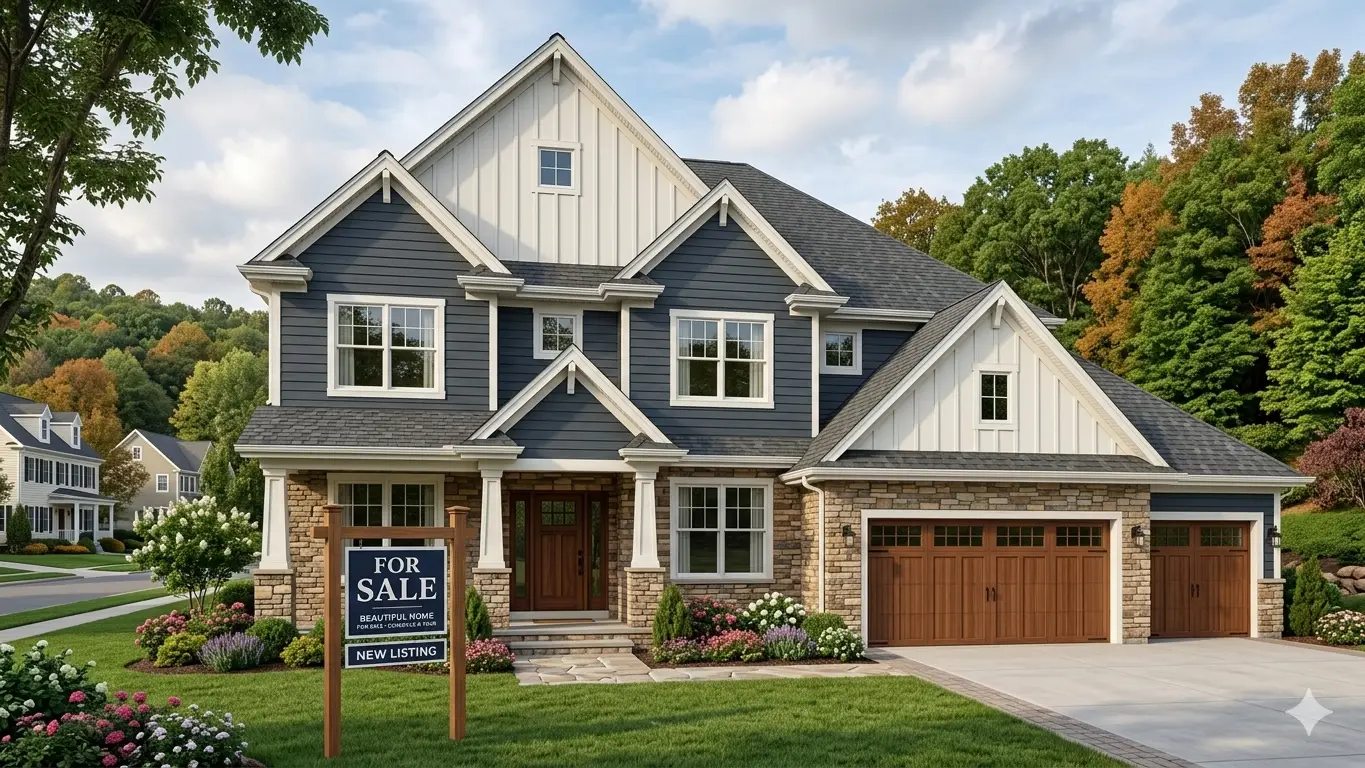
Siding curb appeal is not a soft benefit in NYC’s resale market. It is a measurable one. Properties with updated, well-maintained exteriors generate more showing requests, receive offers faster, and sell closer to the asking price than comparable properties with dated or deteriorated siding.
In a market where buyers compare multiple properties in a single afternoon, a strong exterior impression from new siding sets the tone for how every other feature inside the home is perceived.
What Color Siding Has the Best Resale Value?
What color siding has the best resale value in NYC follows the same principle that applies across most competitive urban real estate markets: neutral colors that appeal to the broadest possible pool of buyers outperform bold or highly personalized choices every time.
The colors that consistently perform best at resale in NYC’s single-family and semi-detached home market are:
- Soft gray and charcoal — the dominant choice for fiber cement installations in 2025 and 2026, pairing well with white trim and black window frames across both traditional and contemporary home styles
- Warm white and cream — timeless across all borough markets and architectural styles, from Colonials in Staten Island to Victorians in Queens
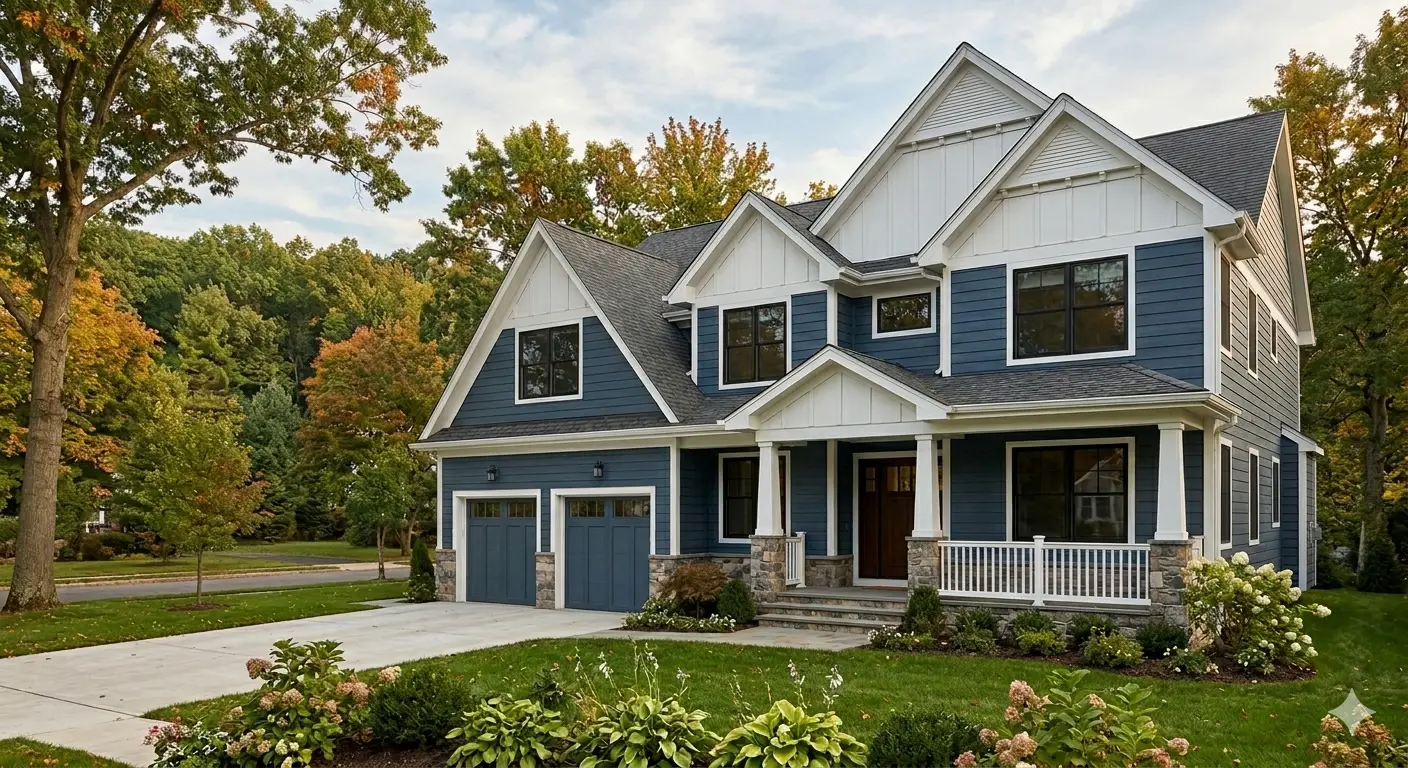
- Navy and slate blue — gaining significant ground in Brooklyn and Staten Island, where board and batten profiles are increasingly common
- Sage green and olive — trending strongly in outer borough markets where natural material aesthetics are driving buyer preference
- Greige and warm taupe — the safest neutral choice for properties targeting the widest buyer pool, particularly in mixed architectural neighborhoods
Colors to avoid at resale include highly saturated primary colors, stark black on large surface areas, and any color that differs significantly from the prevailing palette of the surrounding block. In NYC neighborhoods where brownstone and brick dominate, siding colors that complement rather than contrast with masonry neighbors perform consistently better.
The finish matters as much as the color. Matte and low-sheen finishes photograph better in listing photos and show less visible aging between repainting cycles than high-gloss finishes, which tend to highlight surface imperfections on older homes.
New Siding Pays. Old Siding Costs.
So, does new siding increase home value?
The answer for most NYC homeowners is yes, and the strongest case is fiber cement. A well-executed siding-increase home-value calculation on an NYC property factors in not just the ROI percentage but also the dollar amount that percentage represents at an above-median sale price. Fiber cement returns 113.7 percent of its cost. Vinyl returns 80.2 percent. Both beat most interior renovation projects on pure resale recoup.
Power Roofing NYC installs fiber cement and vinyl siding across all five boroughs, with licensed crews who understand how the condition of siding affects both buyer perception and roof system performance. Whether you need a full siding installation or a targeted exterior assessment before listing.
Remember, the exterior your buyer sees first is the one that sets the price they offer.
Contact Power Roofing NYC today and get a free estimate.
Frequently Asked Questions
Does new siding increase home value?
Yes. New siding consistently increases home value by improving curb appeal, eliminating buyer discounts for deteriorated exteriors, and signaling a well-maintained property. Fiber cement returns 113.7 percent of its cost, and vinyl returns 80.2 percent at resale.
Which siding material has the best ROI?
Fiber cement siding delivers the strongest ROI among standard residential materials at 113.7 percent, adding an average of $24,420 to resale value for a standard 1,250-square-foot installation nationally.
Does vinyl siding add value to a home?
Yes. Vinyl siding adds an average of $15,490 in resale value with an 80.2 percent ROI. It is most effective at lower NYC price points, where budget-conscious buyers compare overall exterior condition rather than material quality.
What is the cheapest siding that still adds value?
Vinyl siding is the most affordable option that still delivers a measurable return at resale. Installed costs start around $6 per square foot, and the 80.2 percent ROI makes it a practical choice for budget-driven exterior refreshes.
Does siding color affect home value?
Yes. Neutral colors, including soft gray, warm white, navy, and sage green, consistently outperform bold or highly personalized colors at resale because they appeal to the broadest possible pool of buyers.
How does new siding affect curb appeal in NYC?
New siding immediately refreshes a home’s exterior appearance, eliminates visual red flags such as cracking and fading, and positions the property more competitively among comparable listings. In NYC’s fast-moving market, strong curb appeal generates more showings and faster offers.
Should I replace siding before selling my NYC home?
If the existing siding is visibly deteriorated, replacing it before listing removes a buyer discount that would otherwise be reflected in the offer price. The ROI on siding replacement consistently exceeds the cost of leaving the issue for buyers to negotiate against.
How do I know if my siding is affecting my roof?
Water that infiltrates through failed siding seams or deteriorated panels can travel into the wall assembly and reach the roof edge from below. Book a roof inspection with Power Roofing NYC, and the team will assess both systems together before any exterior project is scheduled.